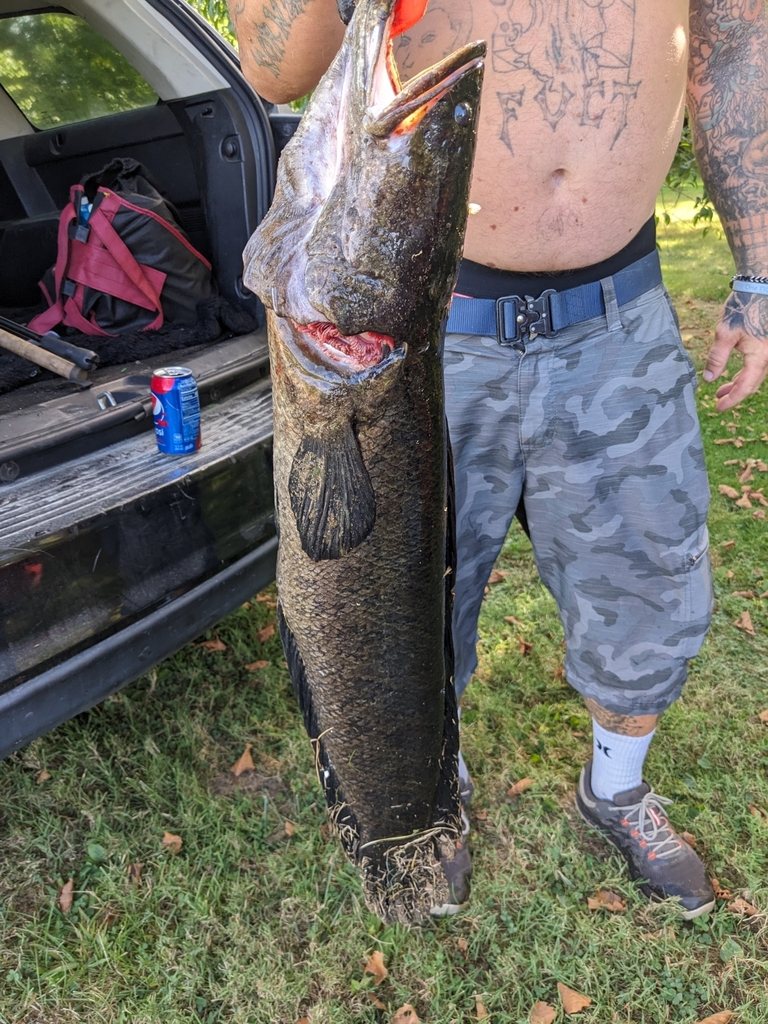
Documented northern snakehead water in Talbot County, Maryland. Choptank drainage. 1 USGS specimen record (2018); status: unknown. Location verified from the USGS Nonindigenous Aquatic Species database.
🌊 Tidal water
NOAA Tilghman Island, Ferry Cove, Eastern Bay · 1.4 mi
Falling now — next Low tide 1:31 PM (in 2h 24m).
Low 2:21 AM · 0.8′High 7:25 AM · 1.4′Low 1:31 PM · 0.5′High 8:15 PM · 1.9′
🎣 Fish the tide, not the clock: snakehead pin bait to the grass on the flood, then feed hard as the falling (ebb) tide drains it out of the cover — the last couple hours of the outgoing into low slack is prime.
Back Creek fishes like most tidal snakehead water in this region — the fish tuck into whatever cover they can find, and here that means grass edges, scattered pads, and downed wood along the shoreline breaks. On calm mornings you'll see them push wakes through the shallows or sit motionless just under the surface, waiting to ambush. Focus your casts tight to that cover rather than open water.
Tide matters more than most anglers admit. High water lets snakehead slide way back into flooded grass and skinny pockets where they're tough to reach. As the tide starts falling, they get pushed out of those refuges and stack along the last available cover — creek mouths, points, and grass lines draining into deeper water. That ebb stage is when the bite really turns on, since the fish are concentrated and feeding before the water drops out completely. Check the Tilghman Island, Ferry Cove tide station to time your trip.
Shore access is workable, with parking mapped nearby, closest around 1.62 miles from the water, so plan for a short walk. If you'd rather cover more of the creek, there's a boat ramp about 1.66 miles away that gets you into a kayak or small boat to work the grass lines properly.
Gear-wise, keep it simple: weedless topwater frogs and buzzbaits worked slow and twitchy over the pads, chatterbaits when the fish are relating to deeper edges, and weedless soft plastics punched into thicker cover. Spool up with 40-65 lb braid — Back Creek snakehead will bury you in grass if you give them an inch.
🅿️ Parking & shore access
For every lot, tap 🅿️ All parking in Maps up top.
🛶 Boat ramps & launches
Parking near the ramp
Coordinates are approximate, for finding the general area. Snakehead is an invasive species — regulations on catching, keeping, transporting and killing it vary by state and change often. Never move a live snakehead between waters. Always confirm current rules with your state wildlife agency before you fish.